
Total Hip Replacement – what is it?
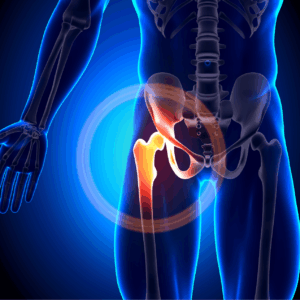
The hip is a ball-and-socket joint designed to move smoothly. Over time, different conditions can damage the protective cartilage in the joint, causing pain, stiffness and reduced movement. Conditions can include;
- Osteoarthritis
- Rheumatoid arthritis
- Avascular necrosis
- Hip fractures or injuries
A total hip replacement is typically recommended after:
- Physiotherapy treatment has failed
- Walking/standing becomes difficult
- Sleep is disrupted by hip pain
- Quality of life is significantly reduced.
A total hip replacement aims to reduce pain and stiffness in order to restore quality of life.
What Happens During Hip Replacement Surgery?
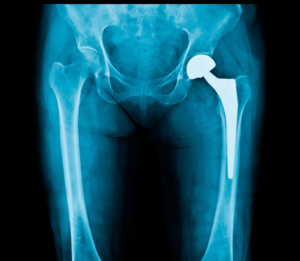
- The damaged ball (top of the thigh bone) is removed
- A new artificial ball and socket are implanted
These components are designed to work smoothly together and reduce pain.
The Role of Physiotherapy in Recovery:
- Restore strength, flexibility, and balance
- Improve walking and movement
- Reduce stiffness and long-term weakness
What to expect following THR surgery:
First days:
- Physio begins usually within the first 24 hours with gentle exercises, walking with support and pain management. You will usually go home 2-3 days after your surgery (depending on how well you are recovering)
- A physiotherapist will also teach you how to use crutches/ walking aids
- It’s important that you follow the advice of your surgeon/physio following surgery
Weeks 1–6:
- Increasing your walking distance with an aid
- Exercises that focus on progressing your strength, mobility and balance
Weeks 6–12+:
- More challenging movements and daily activities
- Many patients will start low impact activities such as cycling on a stationary bike

It can take up to a year before you experience the full benefit of your new hip.
Individual progress varies, but regular physio and movement are essential.
General Exercise tips after a total hip replacement;
Exercises after hip replacement should be safe and gradual and guided by your physiotherapist. Simple activities may include:
- Walking short distances
- Gentle hip movements and strengthening
- Increasing activity length over time
- Low-impact activities (like swimming or walking) can be performed and built up slowly.
- High-impact activities like running or jumping should be avoided to protect the new joint (until advised by surgeon/physiotherapist).
Recovery takes time but consistent physio and activity can help you to regain strength and independence.
If you need pre-op or post-op Physiotherapy for a total hip replacement, you can book in to see one of our experienced physios who will assess you and design a rehabilitation plan tailored to your needs.
You can book an appointment at our Blanchardstown Physiotherapy Clinic, our Castleknock Physiotherapy Clinic or our Old Bawn Physiotherapy Clinic. Through our website www.somertonphysio.ie, email us at [email protected] or call us on
Please do not hesitate to contact us if you have any questions.
You can follow us on our Facebook page and Instagram for more updates.