
Stress Fractures in Female Athletes:
Are You Training Harder Than Your Bones Can Adapt?

At Somerton Physio we continue to see an increasing number of women presenting with bony stress injuries. Many of these patients are training for events such as HYROX, TRYKA, marathons, and other endurance challenges. While these sports can be a great way to improve fitness, increasing training load too quickly without enough recovery can put extra strain on your bones, increase the risk of stress fractures.
What Is a Stress Fracture?
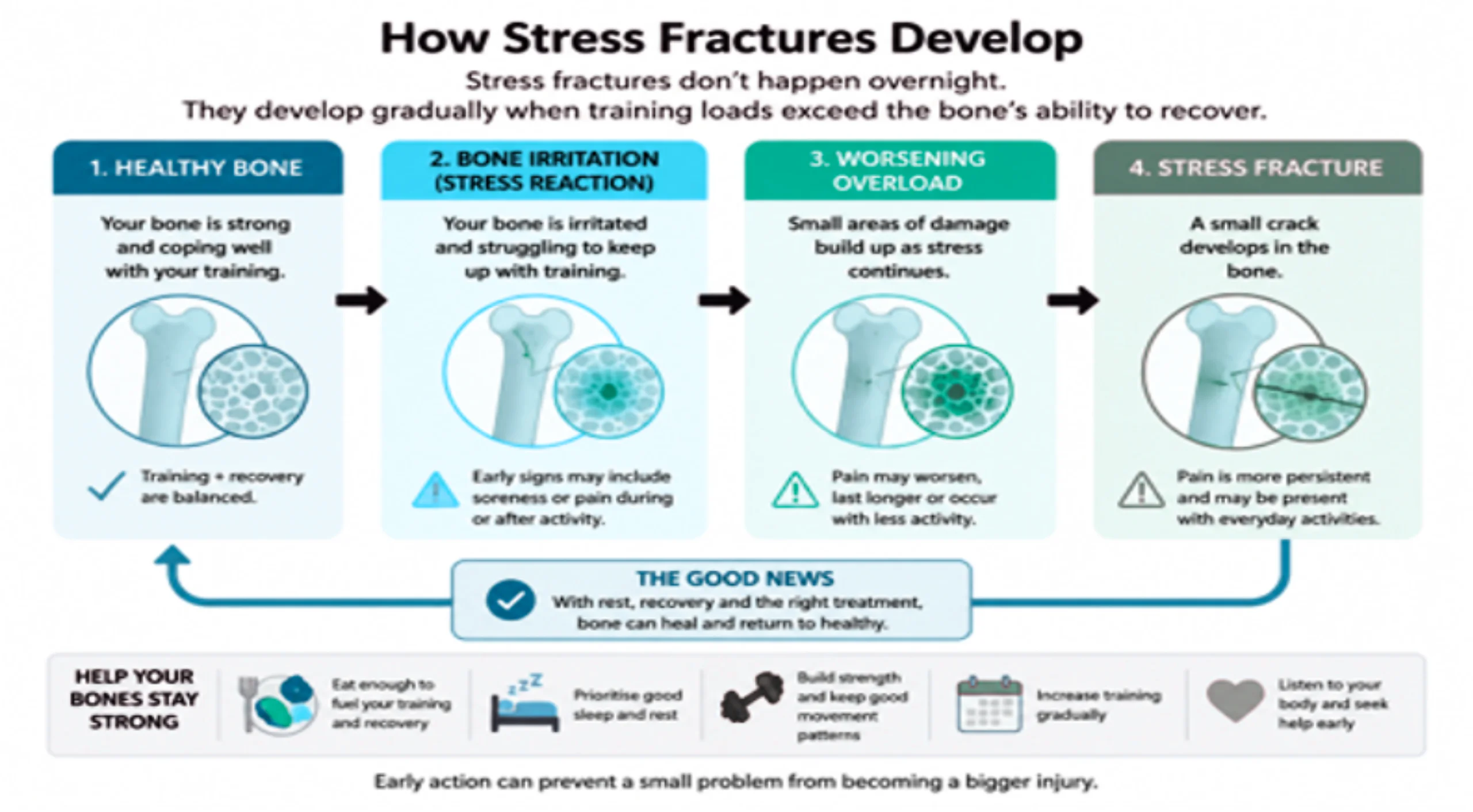
A stress fracture is a small crack or severe bone stress injury that is caused by repeated loading over time. It happens when your training is greater than your body’s ability to recover. Unlike acute fractures, which occur suddenly after a fall or injury, stress fractures develop gradually.
Common Areas Affected:
- Shin bone (tibia)
- Fibula (outside of the lower leg)
- Thigh bone (femur)
- Pelvis
- Foot bones (metatarsals)
- Lumbar spine (lower back)
You may notice:
- Pain in one specific area
- Pain that comes on gradually
- Pain during running, jumping, or other impact activities
- Pain that may improve as you warm up but returns afterwards
- Tenderness when you press on the area
Why Do Stress Fractures Happen?
Female athletes can be at higher risk of developing stress fractures for several reasons:
Not Fuelling / Eating Enough:
Training requires energy. If you’re not eating enough to support your activity levels, your body may struggle to recover, adapt, and maintain healthy bones.
Missing or Irregular Periods:
Changes in your menstrual cycle can affect hormone levels. Reduced oestrogen can weaken bones and increase the risk of stress fractures.
Poor Recovery and Sleep:
Recovery is when your body repairs and adapts to training. Poor sleep, inadequate recovery, and high levels of physical or emotional stress can reduce your body’s ability to keep bones healthy.
Weaker Bones
Some women naturally have lower bone density. Poor nutrition, certain medications (such as long-term steroid use), smoking, excessive alcohol intake, and previous injuries can also make bones more vulnerable.
Doing Too Much Too Soon:
A sudden increase in training volume, intensity, or frequency can overload the bones before they have time to adapt. This is often seen in people training for HYROX events, triathlons, and running events, where training loads can build up quickly.
Strength and Movement Issues:
Muscle weakness, poor running technique, or previous injuries can change how forces are absorbed through the body, increasing stress on certain bones.

Treatment and Prevention
If you think you may have a stress fracture, it’s important to seek advice early. At Somerton Physio our physiotherapists can help identify the cause and guide your recovery.
Treatment usually includes:
- Reducing activities that cause pain for a period of time
- Commencing a strength and conditioning programme
- Gradually returning to exercise when pain free
- Eating enough to support training and recovery
- Prioritising sleep and recovery
With the right treatment and support, most people make a full recovery and can return to the activities they enjoy within a few months.
If you’ve are suffering from a Stress Fracture, and want a personalised assessment and recovery plan, you can book an appointment at our Blanchardstown, Castleknock, or Old Bawn clinics via our website www.somertonphysio.ie, email [email protected], or call 01 9069566.
Follow us on Facebook and Instagram for more tips on ankle health and sports injury prevention.
Please do not hesitate to contact us if you have any questions.
You can also follow us on our Facebook page and Instagram for more updates
