
I’ve Sprained My Ankle – What Should I Do Next?
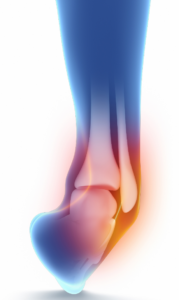
A sprained ankle happens when you twist, roll, or turn your ankle awkwardly. This can stretch or tear the ligaments — tough bands of tissue that hold your ankle bones together. Ankle sprains are extremely common in sports, especially those with rapid changes of direction or jumping. Gaelic football and hurling, soccer and rugby players are particularly prone to ankle sprains.
Understanding the Ankle joint:
The ankle connects the lower leg to the foot and consists of four bones: the tibia, fibula, talus, and calcaneus. The ankle joint allows movement in four directions: plantarflexion, dorsiflexion, inversion, and eversion.
Strong ligaments support the ankle:
- Lateral side:Anterior Talofibular Ligament (ATFL), Calcaneofibular Ligament (CFL), Posterior Talofibular Ligament (PTFL)
- Medial Side: Deltoid Ligament
The ATFL is the most commonly injured ligament, often during an inversion injury — when your ankle rolls outward and the sole turns inward.
Causes of Ankle Sprains:
Ankle injuries are influenced by both external and internal factors:
- External:Uneven or slippery surfaces, unsuitable footwear, excessive grip on boots, or sudden increases in training intensity
- Internal:Reduced ankle strength, limited dorsiflexion, poor balance, slower reaction times, or lower overall fitness levels
Research shows proper conditioning and balance training can significantly reduce the risk of ankle injuries in athletes (Verhagen et al., 2018; Kerkhoffs et al., 2012).
Initial Management of an ankle sprain:

1.
Protect: Avoid movements that
increase pain.
2.
Elevate: Keep your ankle raised to
reduce swelling.
3.
Ice: Apply an ice pack (wrapped
in a towel) for 15–20 minutes at a time, several times per day.
4.
Compression: Light compression can help
support the ankle.
Note:
Modern sports medicine now often uses the PEACE & LOVE approach,
which emphasizes Protection, Elevation, Avoid anti-inflammatories
initially, Compression, Education, and then Load, Optimism,
Vascularisation, Exercise during rehab. This approach promotes faster
and safer recovery (Bleakley et al., 2020).
If you cannot walk four steps or have severe pain/swelling, seek
urgent assessment in A+E to rule out a fracture.
Why
Physiotherapy is Important:
A
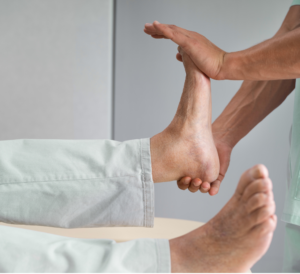
physiotherapist will assess which ligaments are injured, the severity, and the
best treatment plan. Early rehabilitation prevents stiffness and reduces the
risk of long-term instability.
Typical
rehab progression:
·
Acute stage: Gentle range-of-motion
exercises, light stretching, and soft tissue work
·
Strength & stability: Strengthening
the muscles around the ankle
·
Proprioception & balance: Exercises
on wobble boards or balance cushions to retrain ankle control, basic
plyometrics
·
Sport-specific drills: Running,
agility, sprinting, and change-of-direction training to safely return to your
sport. Advanced plyometrics.
Returning
to sport too early increases the risk of recurrent sprains. Up
to 80% of athletes may experience another sprain, and 70% may
develop chronic ankle instability if rehab is incomplete (Waterman et al.,
2010; Kaminski et al., 2020).
How We Can Help at Somerton Physiotherapy:
At Somerton Physiotherapy, we provide:
- Individualised ankle assessments and rehabilitation programmes tailored to your specific needs
- Advanced return-to-play testing, including balance, strength, and agility
- Expert advice and education on avoiding re-injury or a future ankle sprain
We treat all athletes, from beginners to elite players, helping you regain your full potential safely.
If you’ve sprained your ankle and want a personalised assessment and recovery plan, you can book an appointment at our Blanchardstown, Castleknock, or Old Bawn clinics via our website www.somertonphysio.ie, email [email protected], or call 01 9069566.
Follow us on Facebook and Instagram for more tips on ankle health and sports injury prevention.
References (Updated):
- Bleakley C, et al. Managing ankle sprains: PEACE & LOVE approach.Br J Sports Med. 2020.
- Verhagen EA, et al. Effectiveness of preventive measures for ankle injuries.Sports Med. 2018.
- Kaminski TW, et al. Evaluation and management of ankle instability.J Athl Train. 2020.
- Waterman BR, et al. Epidemiology of ankle sprain and chronic instability.J Bone Joint Surg Am. 2010.
- Kerkhoffs GM, et al. Ankle injury prevention strategies.Clin J Sport Med. 2012.